
Ceiling water damage repair in Pearland, TX
What the mark on your ceiling actually means, and why some of them mean stop looking and back away.
Get Help Now(281) 915-182224/7 emergency line. Free estimates from local pros.
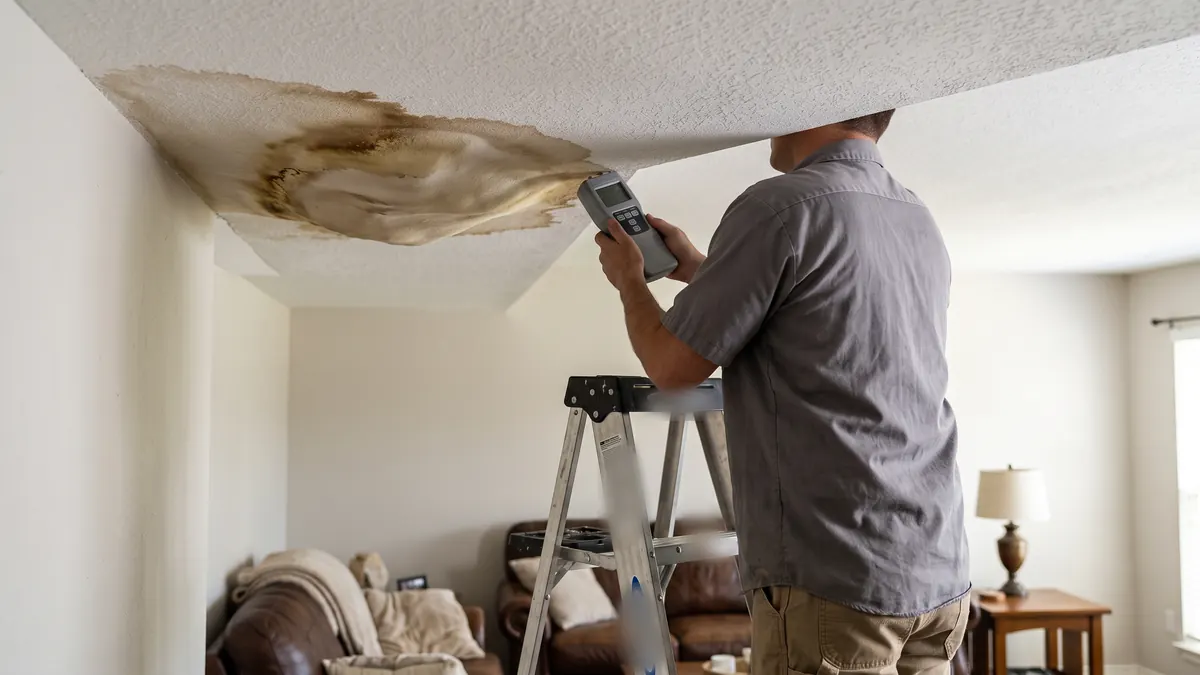
A stain, a sag, or a drip on your ceiling all mean water got in above you. Which one you’re looking at tells you how urgent it is and roughly where to look next.
What the mark on your ceiling is telling you
A brown or yellow ring means water already dried up there at least once. It’s evidence of a past event, not necessarily an active one, but the source that caused it may still be there. A damp patch that’s spreading and growing darker at the edges is a different story. That means water is moving through the ceiling right now.
An active drip is the clearest signal of all: something above you is still leaking. Put a bucket under it, and if you can find a nearby light fixture or vent, keep towels away from outlets. Water and electrical fixtures don’t mix.
If the ceiling is sagging, stop and back away
A sagging or bulging section of ceiling means water has pooled above the drywall, and drywall can hold a surprising amount of it before it fails. The weight adds up fast, and a sagging spot can fail all at once with little warning.
Don’t stand under it. Don’t poke a hole in it yourself to “let it drain.” A local crew can put a small, controlled opening in the right spot and drain the water into a bucket on purpose, instead of it coming down on your floor, your furniture, or you.
Three places this water usually starts in a Pearland home
Summer humidity does a lot of the damage here. An attic air handler condenses gallons of water out of the air on a hot day, and when the drain system fails, that water finds the ceiling below it. The AC condensate overflow guide tracks how that drain system is supposed to work and the points where it usually fails.
Wind-driven roof leaks are the second path. Hurricane Beryl’s high winds in July 2024 hit west Pearland hardest, close to the storm’s track, and that kind of wind can lift shingles or drive rain under flashing that a calmer storm never would. Water that gets in through the roof can travel sideways along a rafter before it ever shows up on your ceiling.
Upstairs plumbing is the third. A leaking supply line, a loose toilet wax ring, or a tub that’s been overflowing slowly can all show up as a stain on the ceiling below, far from where the actual leak is.
Drywall or texture: what actually gets fixed
Wet drywall loses its strength. It softens, it sags, and it doesn’t spring back once it dries out on its own. A small, isolated stain on textured ceiling can sometimes be cut out and patched without redoing the whole ceiling. A sagging or bulging section almost always needs to come down and get replaced, not painted over. Paint hides a stain for a while. It doesn’t fix what’s soft underneath it.
The attic insulation soaked it up first
Before water ever reaches the ceiling drywall, it usually passes through the attic insulation above it. Wet insulation loses most of its ability to hold heat back, and it can stay damp for a long time in a humid attic even after the ceiling below looks dry. Soaked insulation in the affected area typically needs to come out, not just dry in place. Water damage repair follows the water past the ceiling into what gets replaced versus repaired throughout the rest of the house.
Ceiling damage from a storm often overlaps with roof and window damage elsewhere in the house. Storm damage cleanup widens the frame when wind and rain got in through more than one spot at once.
Gravity already told you where the water goes next. Read the mark, handle the safety part first, and get a local crew looking at the source before the next humid afternoon adds to it.
Common questions
Is a stained ceiling dangerous?
A dry, flat stain usually isn't urgent, but a sagging or bulging patch can be. Wet drywall holds water like a shallow bowl, and enough weight can make it fail all at once. Don't stand under a sag or poke at it yourself.
How do I tell if it's the AC or the roof?
Location and timing are the two clues. A stain under or near an attic air handler that shows up on hot, humid days usually points to AC condensate. A stain that appears during or right after a storm, especially near an exterior wall, usually points to the roof.
Does insurance cover ceiling water damage?
It depends on your policy and what caused the water in the first place, since sudden failures and slow ones are often treated differently. Check your own policy or ask your adjuster rather than assuming either way.
Related pages
Appliance Leak Cleanup
The appliances that use water are also the ones most likely to flood a room without any warning at all.
Learn more →Burst pipe
Stop the water first. What it did to your walls and floors is the next call.
Learn more →Commercial Water Damage
Water found before the doors open sets off a different chain of calls than water found at home.
Learn more →Emergency Water Removal
Here's what to do before help arrives, and what actually happens once a crew walks in the door.
Learn more →Talk to a local pro now
We answer 24/7. One call gets a Pearland crew moving on your water damage, with a free estimate and help with your insurance claim.
Get Help Now(281) 915-1822Free estimates. No obligation to hire.